





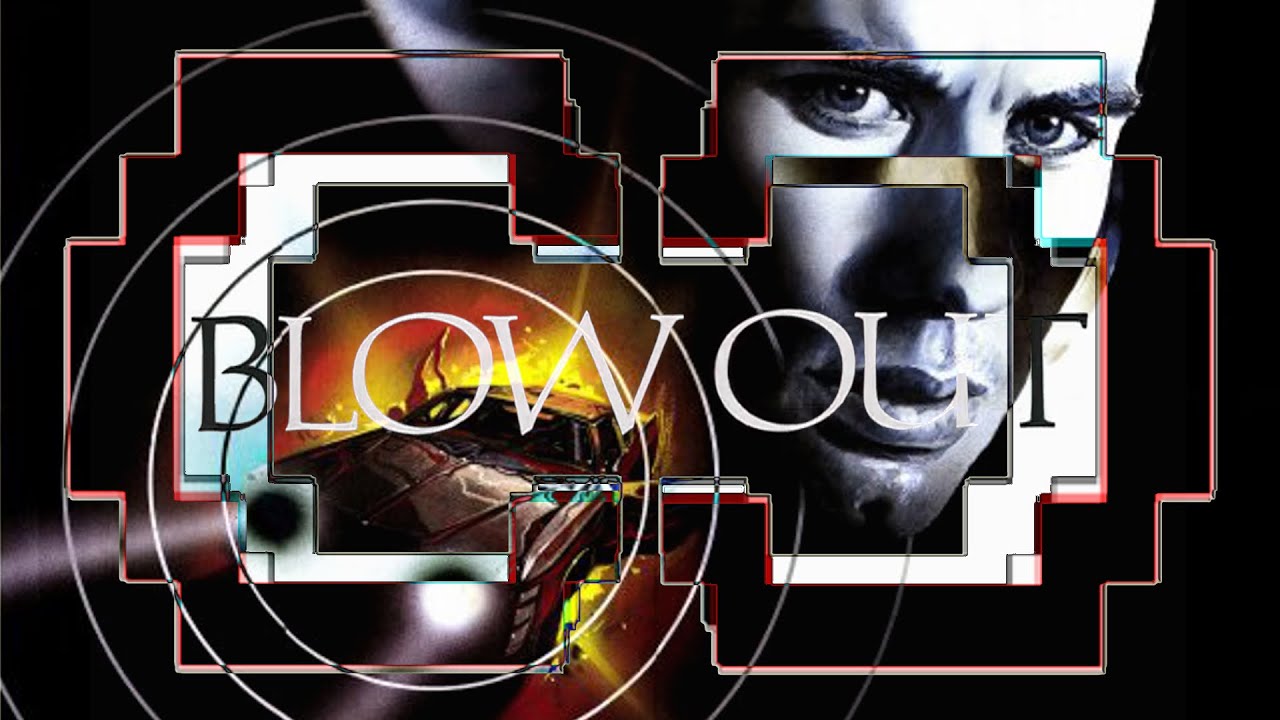
Ever since I became “a cinephile”, Blow Out was one of those films I would hear about as “must-see”, yet I never knew what the movie was about until very recently. Plus, the vague title doesn’t really say much. But I knew one thing – it was a Brian De Palma movie, and that was all I needed. He is one of those unique filmmakers that gets me to watch any film they are attached to. Sure, they might not always “land” the punch, but when they do… you are in for a treat. And Blow Out hit me hard.
In my Letterboxd review (my profile is InMoviesLost, feel free to follow me ;-)), I wrote: “There’s something about the gritty films from the 1970/1980s and the more I see them, the more I love that decade.” I need to admit I had to edit it because, at first, I just wrote the 1970s. Yes, Blow Out is technically an 80s film, but really it is not. It feels like very much a 70s movie through and through, the precision, the grittiness, the attitude. It has it all. Also, I love it when a movie is centred around one idea, and in this film, it is sound. You will learn a lot about making sound effects for films. Sure, it’s all prerecorded and digital now, but the basics are still there if you squint your eyes. But the movie doesn’t stop there, the sound is the focal point of everything, from the story to how De Palma is using sound (and sometimes the lack of it) to emphasise certain scenes.
While watching (and enjoying) this film, something occurred to me. There are so many movies like Blow Out available today, so how come most of them are just “decent” and not straight-up excellent? While watching John Travolta editing and syncing the sound of the accident to a video he made out of pictures from the newspapers, it came to me. Modern filmmakers rely on the magic of technology not just behind the camera but in front of it too. So, frequently, we see characters operate technology that is not around and is “highly specialised” (translation: made up for the movie’s plot); we don’t feel so involved with the story because subconsciously, we know it is all bullshit. It doesn’t matter whether it is “hacking” (aka pressing keys fast) or operating some gadget that could exist (but doesn’t really). In Blow Out, you feel that everything John’s character does is real even if you have never done it. I edited some videos with audio a few years ago, but nothing “analogue” like in this film and yet I was invested in it because I could see he’s working on something and figuring it out as he goes. He doesn’t succeed straightaway, editing is all about patience, and he displays that very well.
That is another thing Blow Out does well; it gives the characters time to breathe and think. They are not all-knowing spies or “common” people who just happen to be fast on their feet. No, even John’s character is a professional sound engineer, and we get to see his process and how painfully slow it is, how delicately he needs to work for everything to come together. Also, it was weird to see John Lithgow as the villain, but he nailed that role.
The last reason I think of this film as very much a 70s movie is the darkness/grittiness that is so uniquely from that decade. Take our main character. He is a good guy for most of the film, but then the ending happens, and he makes one very questionable decision. And the entire movie is building toward that decision, so it’s not a shock by any means but… it still shocks you when you see it. And you see him in that last shot, being broken about it while he was the one who made it happen. Those gut-punch endings… they don’t make them like they used to.
I honestly believe De Palma is a “cinephile” director. His films always strike me as high stakes, precisely planned, shot movies that might occasionally miss the mark, but you can always see what he was striving for. He is one of those I would rather see fail spectacularly rather than being “safely decent”. He knows no discoveries happen in “being safe”, so he keeps pushing himself and his movies. I need to watch more of his films because so far, I like and admire his style.
Overall, Blow Out turned 40 (!) last year, and if it wasn’t for the analogue technology, you couldn’t tell. The movie works just as well today as it did back in 1981. Travolta is in his prime; De Palma is firing on all cylinders, and the entire movie gets you wrapped in this game of cat and mouse; you almost get caught by the gut-punching ending. We get many stellar films today, but I honestly start to understand when top filmmakers get asked: “What’s your favourite movie decade?” And they (mostly) answer the 70s. As a child of the 90s (and 90s had amazing films), I always thought they were short shifting the 90s, but I can say they weren’t. The more 70s movies I watch, the more I enjoy myself. What a decade it was.
That’s all for this one! Did you see it? What did you think about it? Let me know!
Until next time,
Luke