

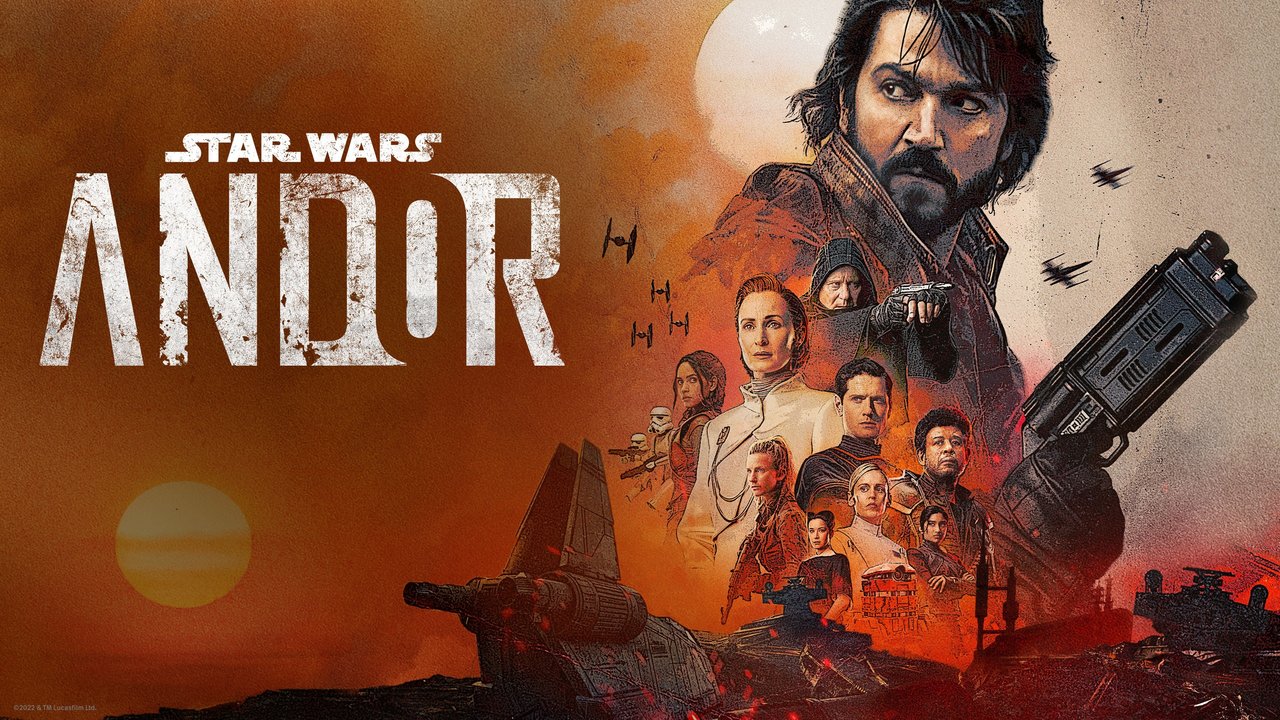
Ever since Disney acquired Lucasfilm (can you believe it’s been more than a decade ago?), we’ve been getting a lot of Star Wars, from what is now called the “sequel trilogy”; to many different shows of various qualities. I won’t link them all because I reviewed them all, so if you want, the tag Star Wars will take you to all my reviews. And we can argue which ones were great and which were not; after all, this is the Internet. This is the place, where dreams are born, only for them to be quickly crashed by strangers saying mean stuff. Nevertheless, I think we can all agree that not every new Star Wars property “delivered” what fans were hoping. But with Andor, it seems like Disney understood what they had, so they kept to their “one episode per week” release schedule, but they released the first three episodes at the same time. There is no doubt that they were slower episodes because they had to set up so much for this entire show, so releasing them like this was the only way because by the end of episode three, you are at least intrigued enough to watch it further and arguably, to get you on the same wavelength as this show.
What do I mean by wavelength? Well, Andor dares to do something different in this world full of action, adventure and quick cuts. It takes its time and relies on people to summon their last attention span cells they may still have to watch this show. A show, many “fans” argued; Star Wars without Star Wars. How does that make sense, you might ask. Let’s say, and this may or may not be a spoiler, you won’t see much action here. And you won’t see any Jedi knights, let alone lightsabers. And if you are that kind of Star Wars fan that heavily connects those elements with this universe, yeah, Andor isn’t a show for you. That is fine; I firmly believe that not everything is for everybody. You will struggle to find a single piece of art that is admired by everyone. Whether it is a film, song, or painting, there will always be someone who doesn’t connect with it. What Andor is, however, is a quality show that, at times, reminded me of Better Call Saul (2015 – 2022, my review here) as they are almost identical. Both are spin-offs within the same universe, but both have taken the unpopular route of being more about characters and complex plot lines, and despite you knowing what is coming (given they are both prequels), you will still enjoy the way of getting there.
Where Andor won me over were casting and the showcasing of what actual rebellion looks like. At least based on my knowledge. And let me start with the rebellion aspect. In many other movies, we see the end of a rebellion as almost inevitable to win, how they are days from winning, toppling the government or achieving their goal. What Andor did was showcase what it takes to spark the flame of rebellion, keep it alive, and maintain the momentum. As the process of rebellion in the Star Wars universe was brewing for years, it didn’t “just happen” over a few days when this young punk called Luke Skywalker decided to join. No, there had to have been bedrock planted all over the galaxy involving money (or, in this universe’s case, credits), iron will and, most importantly, sacrifices. Something this show doesn’t shy away from is how much each of our heroes has sacrificed to be part of this rebellion, from credits to (in some cases) their lives. I won’t talk about any spoilers, but let me say some deaths shocked me, how quickly the show was willing to kill off characters. And even though I wanted to spend more time with some of those characters, their killing never felt cheap or done for shock value. This is what an actual rebellion looks like, a lot of credits, blood, sweat and death, and you may or may not succeed in the end.
It’s impossible to talk about Andor without mentioning this cast. Diego Luna shines even brighter than in Rogue One: A Star Wars Story (2016, my review here) and is a fine example of how to make your character neither good nor bad. He always felt like an actual person as he wasn’t trying to fight some righteous fight, or he would always make the best/most moral move. No; on the contrary, the series starts with him literally killing two imperial officers. But we understand his motivations as the season progresses more and more. Then we have Stellan Skarsgård, who seems to be here to remind us that just because he “dares” to make comedies as well, he is still one of the best actors around. He utilised every single moment he had on screen, and it was a delight to watch his performance. I loved how the show flipped our expectations with these two actors – Kyle Soller and Denise Gough. When the show started, Kyle’s character was set to be the potential “big bad” of this season, with Denise’s character as the one who isn’t “as bad”. But as he has fallen, she has risen to new, more evil heights than ever. Kyle’s character (Syril) wants to be part of this machine called “The Empire”, but Dedra (Denise’s character) seems to be set on running it soon. Her rise to power and seeing how that corrupts her soul was chilling. Every time you think there is no way she will get any worse, she does. What a stunning performance by Denise and Kyle.
Then we have the “others”, but believe me when I say you will remember them as well despite them not having as much screen time. Genevieve O’Reilly shines as Mon, the sneaky bureaucrat; who is trying desperately hard to do the right thing whilst not getting caught. You could argue that her scenes on Coruscant felt out of place. And they did because they were supposed to. I loved the contrast between the harsh reality of the “dirty” rebellion struggling to survive whilst we watch her “clean” character, surrounded by wealth, always attending functions, and trying to get influential people to join the cause. Then we have a trio of powerful women starting with Adria Arjona, Varada Sethu and Faye Marsay, who are the “dirty rebellion”. Unlike Mon, they must sacrifice a lot to survive to keep this rebellion going, and they all did great with the time they had. They were all set up to be a much bigger part of this story next season, and I can’t wait to see more of them. Also, I need to give a special shout-out to Fiona Shaw. You can see where her character will end up from the moment she first appears on the screen, and yet when the final episode happens, it is her speech that will stay with you.
I realise we still have 12 episodes (one season) to go, but I think Andor has already succeeded in what it wanted to do/showcase. Firstly, for any rebellion to be successful, it requires many sacrifices and not as much fighting as you might believe. Before the big “let’s fight and topple this Empire/government/whatever” moment, you need to have many smaller moments in place for it to all work. Another thing I think this show delivered is this (I hope) would be the future of Star Wars properties in general. We don’t need to see the Skywalker family; we don’t need quick-paced action, nostalgic trips to familiar places or even lightsabers to make a great Star Wars show/film. Don’t get me wrong, I will always welcome a great lightsaber sequence or stories about different Jedi knights, but to me, there is no “one way” to make a Star Wars show/film. As Andor proved, there is a different way, and if you give people something intelligent, almost “Cold War in space”, they will (mostly) tune in and like it. I can’t wait for this story to conclude.
Overall, Andor is a Star Wars show that we have not seen before. You can say it’s the most politically-oriented Star Wars property we’ve ever had, and I know most of you have horrible flashbacks to the prequels by a mere mention of the word “politics”. But here’s the thing, when it’s done right, and the show can rely on many powerful performances from everyone involved, the ride is much different. The story itself takes many interesting twists and turns I didn’t see coming, and I think if you get over the slower start, you will get rewarded massively. Andor is one of the most satisfying slow-burners I have ever watched.
That’s all for this one! Did you see it? What did you think about it? Let me know!
Until next time,
Luke